
For many in early recovery, the promise of restful sleep is both a motivator and a mystery. After detox, the body craves healing rest, but sleep often becomes more elusive, not less. Clients often say: "I thought sobriety would help me sleep better, but I'm up all night." This is not a failure of effort or intention. It's a temporary but deeply real consequence of a system rebalancing its neurobiology, energy flow, and circadian rhythm after months or years of chemical disruption.
In the Unified Flux Model (UFM), we treat sleep not just as a physical state but as a multi-dimensional reset, a nightly return to coherence that allows the nervous system to repair, the emotional body to discharge, and the energetic field to re-align. When addiction scrambles this architecture, recovery must include not only cognitive-behavioral techniques but somatic, energetic, and spiritual recalibration.
This article explores what happens to sleep after sobriety, why normal sleep patterns often take time to return, and how UFM-aligned practices can help reclaim the night as sacred terrain for healing and regeneration.
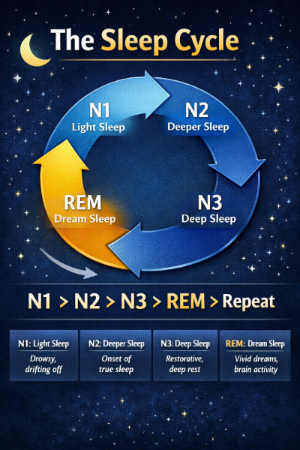
Healthy sleep is composed of four to six 90-minute cycles per night, rotating through distinct stages:
- N1 (Light Sleep)
- N2 (Intermediate Sleep)
- N3 (Slow-Wave or Deep Sleep)
- REM (Rapid Eye Movement)
Why Early Sobriety Disrupts Sleep
Common symptoms in this phase include:
- Insomnia or delayed sleep onset
- Nightmares or trauma dreams
- Waking after only 3–4 hours
- Exhaustion during the day despite poor nighttime sleep
In UFM terms, this is a clash between energetic dissonance and circadian coherence. The body's natural rhythm is trying to reassert itself. Still, it's competing with disrupted energy flow, unresolved trauma, and emotional hyperarousal, especially when long-dormant memories begin surfacing in REM sleep.
Sleep and the Energetic Body
- Clients often report:
- Feeling tired but wired
- Startling awake with racing thoughts
- Feeling like they can't "land" in their body
In UFM, we explain this as energetic fragmentation: the subtle body remains on high alert, resisting the parasympathetic shift required for deep rest. The solution is not just melatonin or sleep hygiene; it's realignment. This means regulating the nervous system and restoring coherence to the energetic field.
UFM Techniques to Rebuild Sleep Architecture
1. The Descension Breath
This breathing pattern guides awareness down through the body:
Inhale through the nose (4 counts), imagining breath entering the crown
Hold gently (2 counts), then exhale through the mouth (6-8 counts) as awareness descends to the heart, belly, and pelvis
This shifts energy downward, signaling the vagus nerve that it's safe to rest.
2. Nightly Energy Cord Clearing
Before bed, clients visualize releasing energetic attachments from the day:
"I release what is not mine to hold."
"I call back all parts of myself in peace."
This practice stabilizes the field and prepares the body for energetic closure.
3. REM Reclamation Ritual
For those experiencing trauma dreams or fragmented REM, we teach a journaling and breath ritual before sleep:
Write one sentence affirming emotional sovereignty:
"What happened to me is real, but it does not own me."
Follow with two minutes of alternate nostril breathing to balance hemispheric activity and reduce emotional hyperarousal. These practices help reintegrate dream content into waking coherence and reduce overnight psychic fragmentation.
Spiritual Dimensions of Sleep
In many spiritual traditions, sleep is not a passive state; it's a liminal portal. Indigenous cultures often refer to dreaming as the "night school of the soul." In Jungian terms, it is the terrain of the unconscious, the realm where symbols rise to meet the self and inner transformation takes root.
In addiction, this portal often shuts. Sleep becomes either a dreamless collapse or emotional torment. But in recovery, the dreaming body returns. Clients report dreams filled with ancestors, old wounds, symbols of freedom, or deeply emotional reconciliations.
In UFM, we honor these as energetic transmission indicators that the deeper self is beginning to re-engage with healing, often long before the waking mind catches up.
Final Words: Reclaiming the Night
The Unified Flux Model doesn't just ask the question, How can I fall asleep?
It asks: How can I become aligned enough to let rest receive me?
In that shift, night becomes sacred again.
Not a battleground. Not an escape. But a sanctuary.
And in that sanctuary, healing becomes inevitable.
References
Roehrs, T., & Roth, T. (2009). Sleep disturbance in substance use disorders. Psychiatric Clinics of North America, 32(4), 805-816. https://doi.org/10.1016/j.psc.2009.08.007
Walker, M. (2017). Why we sleep: Unlocking the power of sleep and dreams. Scribner.